Presentatie
Het Institut français NL en het Nieuwe Instituut nodigen samen Estelle Zhong Mengual uit om naar Nederland te komen om deel te nemen aan het project “Zoöp Connections”, gecoördineerd door EUNIC Netherlands. Van 7 tot 10 april 2025 zal de Franse kunsthistoricus deelnemen aan een programma over de banden tussen de levende wereld en culturele instellingen aan de hand van reflectie, onderzoek en dialoog. Deze uitnodiging is gericht op hoe ecologische regeneratieprincipes en co-governance met niet-menselijke entiteiten de rol van culturele instellingen kunnen herdefiniëren in het licht van klimaatverandering.
Leren. De eerste fase van het programma is gericht op kennisdeling, reflectie en leren. Estelle Zhong Mengual zal “Representatives for the Living” ontmoeten tijdens een bezoek aan verschillende Zoöp-organisaties, waaronder De Ceuvel in Amsterdam, Buitenplaats Brienenoord en het Nieuwe Instituut in Rotterdam. Bij het Nieuwe Instituut werd het Zoöp-model voor het eerst ontwikkeld en volledig geïmplementeerd. Daarnaast zullen zowel one-on-one als collectieve bijeenkomsten haar in staat stellen de dialoog aan te gaan met onderzoekers, docenten en kunstenaars die bijdragen aan het Zoöp-model bij het Nieuwe Instituut.
Organiseren. Tegelijkertijd is het programma gericht op het bevorderen van nieuwe relaties en het bedenken van nieuwe structuren gebaseerd op de transformatieve principes van samenwerking en organisatie. Een netwerklunch met een tiental museumprofessionals, curatoren, onderzoekers en projectpartners zal de dialoog bevorderen tussen Estelle Zhong Mengual en belangrijke acteurs uit de Nederlandse culturele scene die werken aan regeneratieprincipes.
Samen creëren. Het programma betrekt Nederlandse deelnemers bij een creatief proces dat is ontworpen om een structurele verschuiving teweeg te brengen. Er zal een werkgroep van vijf Nederlandse deelnemers worden gevormd om collectieve reflectie en kennisdeling met Estelle Zhong Mengual te stimuleren. Daarnaast wordt de Franse kunsthistoricus uitgenodigd als keynote spreker op het symposium “Compos(t)ing: Regenerative Creative Practices”, dat op 10 april wordt georganiseerd door het Nieuwe Instituut in samenwerking met verschillende Nederlandse kunst- en designopleidingen. Ze zal belangrijke perspectieven uit haar werk presenteren en deze gebruiken om te reflecteren op de discussies die ze gedurende de dag zal voeren.
Biografie
Estelle Zhong Mengual is kunsthistoricus en promoveerde aan Sciences Po in Parijs, waar ze 6 jaar lesgaf aan de Masteropleiding ‘Art et Politique’, gecreëerd door Bruno Latour. Ze is nu de leider van “Inhabiting the landscape. Artistic practices of hospitality for living things” aan de Nationale School voor Schone Kunsten in Parijs.
Ze is auteur van meerdere boeken, waaronder Leren Kijken (gepubliceerd in 2024), waarin ze nieuwe manieren voorstelt om naar de representatie van de levende wereld in de kunst te kijken, met behulp van de instrumenten van de milieuwetenschappen en de meest hedendaagse natuurwetenschappen. Samen met choreograaf Jérôme Bel creëerde ze twee voorstellingen waarin onze relaties met de levende wereld worden onderzocht: “Non human dances” dat in première ging in het Louvre in 2023, en “Starting this world anew” (2024) met de Vlaamse actrice Jolente de Keersmaeker in de hoofdrol.

Terugblik – Estelle Zhong Mengual
The word “meaningful” is one of my favorite words and there is no equivalent for it in French, my mother tongue. “Meaningful” binds together the quality of being important and the quality of having meaning until they become inseparable: something is imbued with significance when it exists very strongly in the life of someone.
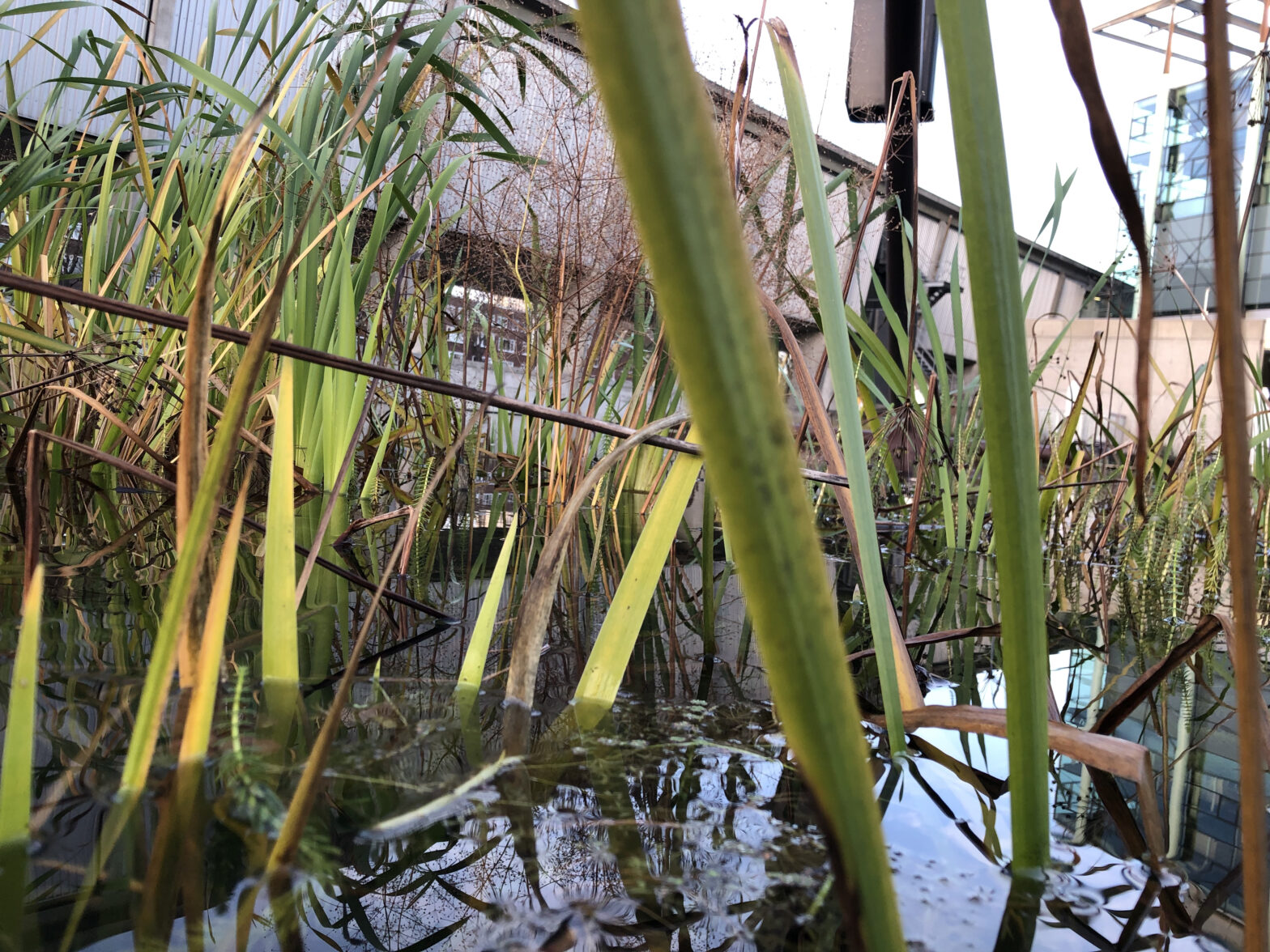
“Meaningful” is the word that came to me last April when listening to Thijs de Zeeuw to describe his experience as a Speaker for the Living at the Zoöp de Ceuvel in Amsterdam. He was explaining to me how his mission consists in trying to see De Ceuvel from other perspectives than his own. Take this riverbank just a few feet away from the bar tables: a welcoming sight where you want to drink a beer. But this bank doesn’t only exist in our human-framed world. It’s also flashing as a site of interest in the bees’ field of attention. Here water is shallower: it could be a treasured place to rest and drink. Only there was nothing for them to land on: that’s why Thijs added a pile of branches alongside the bank so that it could become welcoming to more life forms than us. The gesture seems ridiculous: it doesn’t look like anything grand and it sure doesn’t look pretty (which is a recurrent problem: how humans tend to find messy the habitats of other beings than themselves and destroy them – sometimes aesthetics taste is not only a bourgeois problem but a matter of life and death for non-humans). But it’s better than grand and pretty: it’s world-expanding.
Suddenly, you enter a world where things are not what they seem to be. This sand pile is not just a sand pile: it means “life” for burrowing bees. This ladder by the canal is not just a ladder; it means “home” for tubeworms. This wild reseda in the Nieuwe Instituut’s garden is not just a flower: it means “center of the world” in the life of the the yellow-faced mask bee, a species rarely found in Dutch cities. Suddenly, nothing is “just”. Suddenly, everything is “more”. Visiting De Ceuvel or the New Garden in Nieuwe Instituut makes you feel dizzy. Everywhere you look, every little corner, every inch could be a place that means something to someone you don’t see.
Meaningfulness is everywhere: this rock, this trunk, this water temperature, this plant, this roof is layered with hidden significations and secret relationships woven through time by other life forms than us. That’s the kind of emotion you usually have in front of a Vermeer’s painting or Sint-Bavokerk: a sense of depth in front of the historical sedimentation of meanings. This means that culture, defined as such, is an invention of life itself, not a human invention. Giving meaning, finding meaning – value and significance – that persists over time, that is passed on generation after generation, is not an intellectual human affair. It is what life does.
This dizzying experience made me realize how easily human land management can undo what we call environments and are more accurately worlds, slowly built through millions of years of inherited and invented non-human meanings. This also made me realize how life can spring back if given the opportunity to thrive – which is what Zoöps are aiming to do. If you invite them, they come. Despite all we have done to diminish them, if we do it right, even in the middle of a seemingly inhospitable city like Rotterdam – they will come. It’s one of the strongest ecological emotions I have ever experienced.
And yet, there is a paradox: we tend to be more sensitive to the meaningfulness of the living world when there are human intentions behind it. “A well-maintained garden path says: all this wilderness on the left and right is meant to be that way” writes Peter Zwaal, assistant gardener at Nieuwe Instituut. Otherwise, we tend to find this garden path just ugly and not infused with non-human meaning. Human intentions, under the guise of human design and engineering, make nonhuman habitats more acceptable, approachable, decipherable, and valuable for us. It’s as if we had never been emancipated from the toxic fable of the Garden of Eden, where everything feels full of purpose and wonder only because a human-like figure created it. And sometimes marveling at human inventiveness can obliterate, once again, the inventiveness of others.
This is why I see a fully accomplished Zoöp as not only a place where space is deliberately shared with other lifeforms – but where the ability of creating and giving meaning, and thus deciding what is important, is deliberately shared with them. A place where meaningfulness is no longer a human monopoly. Where design is also oriented towards the goal of rendering human visitors not only sensitive to the mere presence of plants, non-human animals, mushrooms, bacteria, but also sensitive to how they are shaping the place with their own ways of creating meaning and value. This is perhaps my take on what a regenerative relationship can look like: a relationship where meaning flows from one form of life to another and where we let what is meaningful for other lifeforms transform what is meaningful for us.
Over
Zoöp Connections is een initiatief van EUNIC Netherlands en wordt gecoördineerd door DutchCulture en het Nieuwe Instituut in samenwerking met het Zoönomic Institute. Het verblijf in de residencies wordt georganiseerd door de volgende duo’s, die ieder een Zoöp koppelen aan een lid van EUNIC Netherlands: Zoöp Kunstfort bij Vijfhuizen en British Council Nederland, Zoöp Stichting Bodemzicht/’t Gagel en Vlaams Cultuurhuis de Brakke Grond, Zoöp De Ceuvel en Goethe-Institut Niederlande, Zoöp Creative Coding Utrecht en het Instituto Cervantes Utrecht, en Zoöp Nieuwe Instituut en het Institut français NL.
Partners
- In het kader van: Zoöp Connections
- Georganiseerd door: EUNIC Netherlands, DutchCulture en het Nieuwe Instituut
- In samenwerking met: Institut français NL
- Fotocredits Nieuwe Instituut : Patricia de Ruijter